
Why Smart Home Design Is Crucial — And Why It Comes at a Cost
When planning a smart home, most people focus on the end result — lighting scenes, cinema rooms, seamless control.
But what’s often overlooked is the most critical phase of the entire project:
The design process.
It’s also the part that many homeowners, architects, and even developers underestimate — particularly when it comes to cost.
In reality, the success or failure of a smart home system is almost entirely determined before a single cable is installed.
What Do We Mean by “Smart Home Design”?
Smart home design is not about choosing products.
It’s about engineering how technology integrates into the fabric of a home.
This includes:
Lighting control design (circuiting, keypads, scenes)
Audio-visual layouts and speaker placement
Network infrastructure (the backbone of everything)
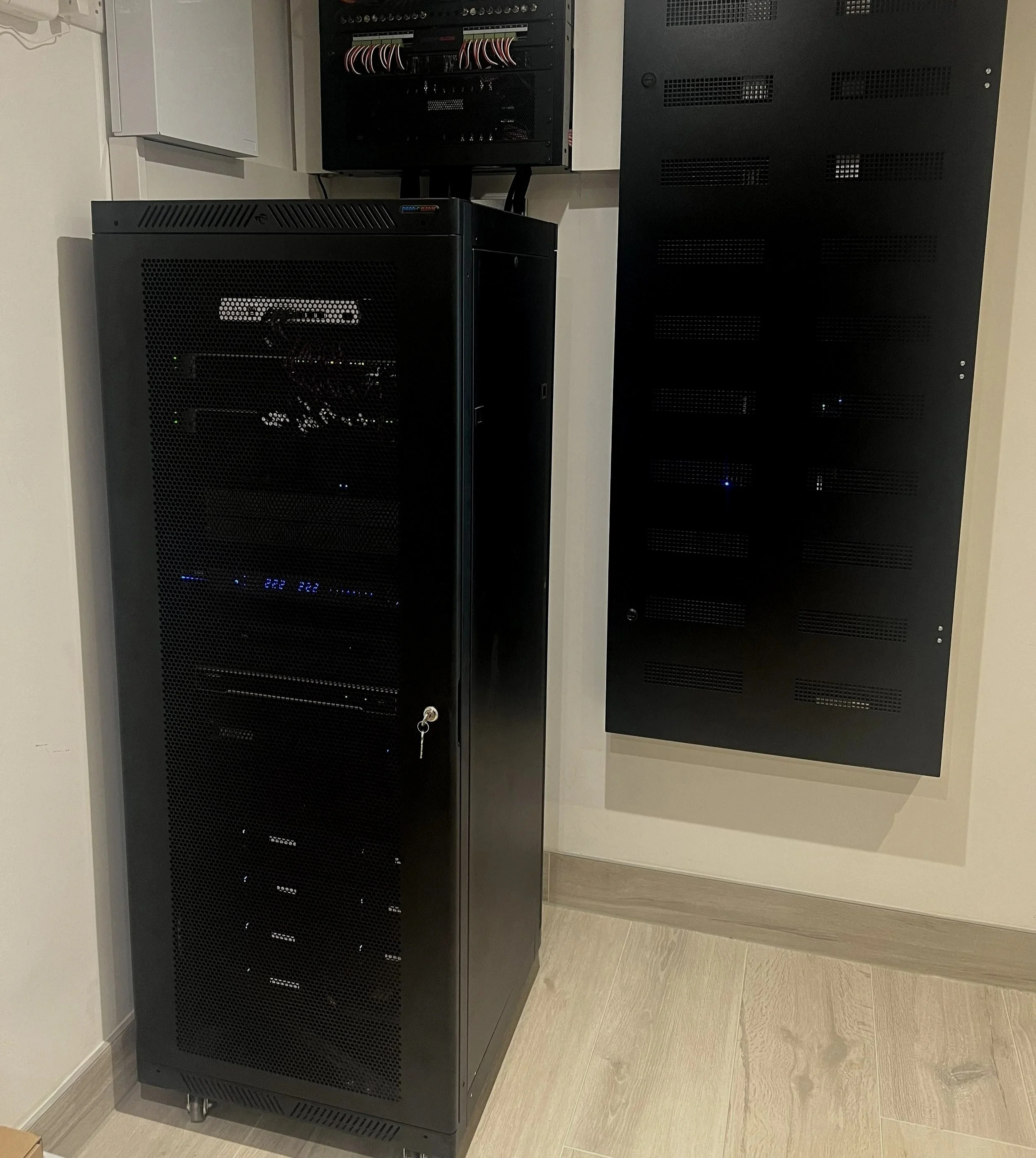
Rack design and equipment locations
Control system architecture
Integration with heating, shading, and security
Coordination with architects, interior designers, and M&E consultants
At this stage, every decision impacts usability, performance, and long-term reliability.
Why Design Matters More Than the Technology Itself
One of the biggest misconceptions in the industry is that the quality of a smart home comes down to the products used.
In reality:
Even the best technology will fail in a poorly designed system.
A well-designed system ensures:
The lighting feels intuitive, not complicated
Audio is evenly distributed and immersive
Wi-Fi works flawlessly throughout the property
Equipment is hidden but accessible
The system is future-proofed and scalable
Without this level of planning, you end up with:
Too many switches on the wall
Dead Wi-Fi zones
Poor audio coverage
Visible equipment and cabling compromises
Frustrating user experiences
The Earlier the Design Happens, the Better the Outcome
Smart home design should begin at the same time as architectural design — not after.
Why?
Because technology impacts:
Electrical layouts
Joinery and ceiling details
Plant room and rack space
Lighting design and mood
External infrastructure (gates, CCTV, garden audio)
When brought in early, a technology partner can:
Reduce costly rework
Coordinate seamlessly with other trades
Ensure the home is designed around the technology — not retrofitted later
Late involvement almost always leads to compromise.
Why Smart Home Design Comes at a Cost
This is the part many people question:
“Why do we have to pay for design?”
The short answer is:
Because you’re not paying for drawings — you’re paying for expertise, coordination, and risk reduction.
A proper smart home design process involves:
1. Time and Technical Expertise
Designing a system for a high-end home can take dozens (sometimes hundreds) of hours.
It requires deep knowledge of:
Multiple technology disciplines
Product ecosystems and compatibility
Construction processes
User experience and human behaviour
2. Detailed Documentation
A professional design package includes:
Lighting schematics
Wiring and containment drawings
Rack layouts
Equipment schedules
Keypad layouts and engraving schedules
Network topology
These documents are what allow the project to be delivered correctly on site.
3. Coordination Across the Project Team
A smart home touches almost every trade.
The design process involves ongoing coordination with:
Architects
Interior designers
Electrical contractors
HVAC specialists
Developers and project managers
Without this, things get missed — and mistakes become expensive.
4. Avoiding Costly Mistakes
Good design saves significantly more money than it costs.
Common issues avoided through proper design:
Rewiring due to incorrect circuiting
Moving or reworking equipment locations
Retrofitting infrastructure after plastering
Upgrading inadequate networks post-completion
5. Protecting the End User Experience
Ultimately, design ensures the system works for the homeowner.
Not just technically — but intuitively.
That’s what turns a house with technology into a genuinely smart home.
What Happens If You Skip the Design Phase?
In most cases, one of two things happens:
The electrician or contractor makes decisions on the fly
The system is designed reactively as the build progresses
Both lead to:
Inconsistent results
Limited functionality
Increased costs later
A compromised finish
And most importantly:
A system that doesn’t live up to expectations.
How We Approach Smart Home Design at CHS
At Connected Home Systems, we position ourselves as a technology partner, not just an installer.
Our design process is:
Collaborative — working alongside the full design team
Detailed — every element considered before installation
Design-led — ensuring technology enhances the architecture, not detracts from it
Future-focused — building systems that evolve with the home
This approach ensures that when installation begins, everything is already resolved — on paper.
Final Thoughts
Smart home design is not an optional extra.
It’s the foundation of the entire system.
And while it does come at a cost, it delivers:
Better performance
A cleaner, more considered finish
Fewer issues during the build
A significantly better user experience
In short: the design is what makes the technology work.
Considering a Smart Home Project?
If you're planning a new build or renovation and want to understand how technology should be designed into your home, we’re happy to help.
